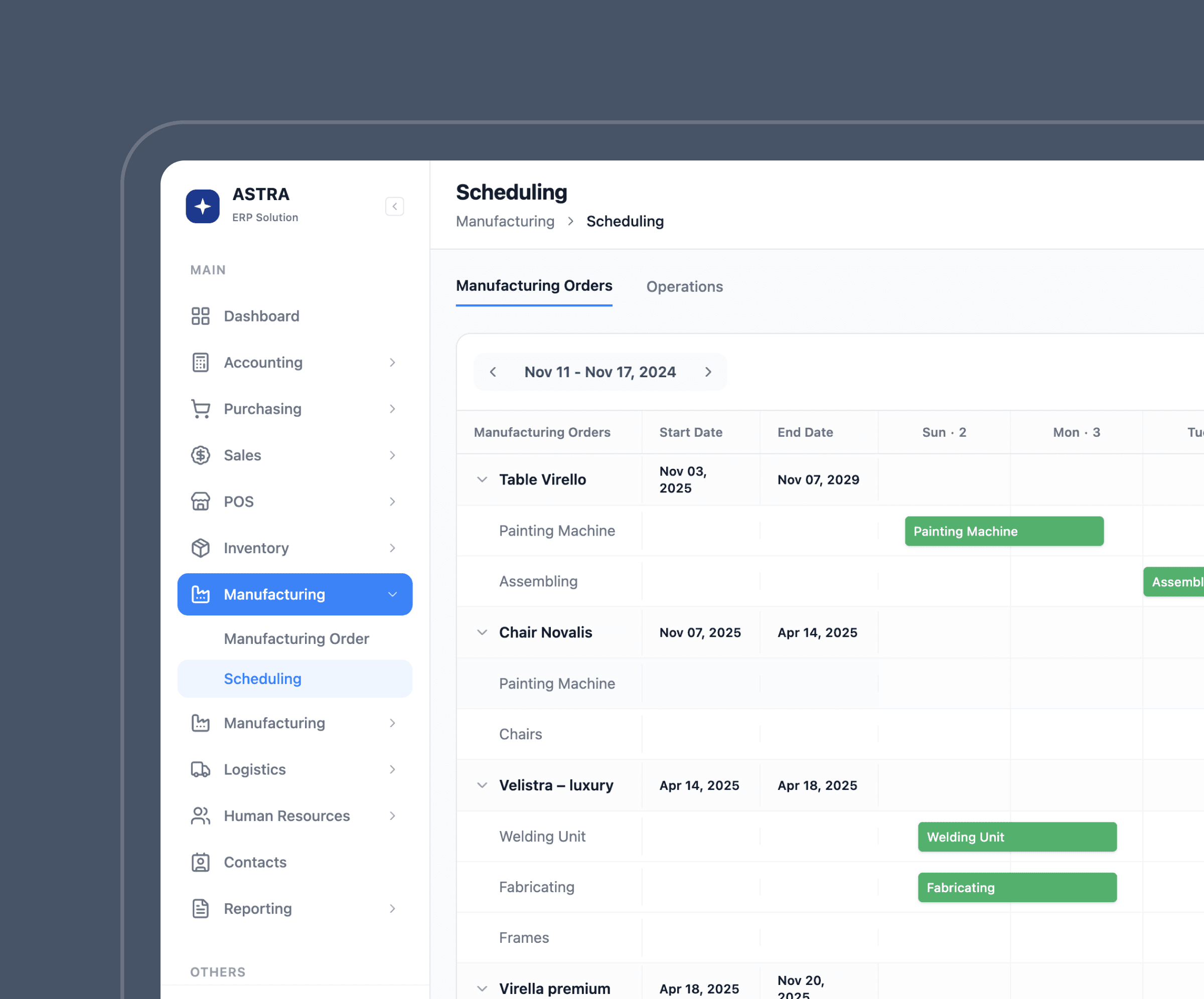
Odoo ERP
Development Services

Odoo ERP development is the customization
and extension of Odoo modules to fit
client workflows, data, and users.
Elinext tailors Odoo to your processes
end to end.
Do Odoo

28+

Years in ERP development

80+

ERP development projects delivered

20+

In-house ERP specialists

90%

Of middle & senior specialists

Build Odoo with Certified Experts

ISO 27001 certified
ISO 9001 certified
ISO 13485 certified
AWS Certified Solutions Architect
Google Cloud Professional Cloud Architect
Microsoft Azure Solutions Architect Expert

Elinext brings Odoo developers, ERP consultants, integration specialists, QA engineers, business analysts, and project managers together to shape Odoo around real business workflows.

Let's discuss

Our Awards and Recognitions

Top Clutch stress testing company 2025
SS Mob App 2025 award
The Manifest artificial intelligence company Germany 2024 award
Top Clutch reliability testing company 2025
AI-Development Top Company 2025 Feedbax
Banking Software SEMfirms winner
Clutch champion fall 2024 certification
The Manifest AI company Warsaw 2024 award
SoftwareSuggest eCommerce award
Education apps Feedbax award
Top Clutch compliance testing company 2025
Top data visualization companies award
Blockchain development award
Easy implementation award 2024
Top 100 .NET companies in the United States
Software development award

What are the Key Odoo ERP Features Elinext Can Build

01

Business Modules

Sales, CRM, accounting, inventory, manufacturing, HR, purchasing, and reporting modules adapted to your operating model.

Need Odoo that fits your workflows instead of forcing new ones?

Let's shape Odoo around your business logic.

Hire Odoo Experts

Custom Odoo AI Integrations by Elinext

01

AI Assistants

AI assistants can help users find ERP data, draft messages, summarize records, and speed up support or sales workflows.

Most Popular Odoo ERP Integrations and Plugins

01

Commerce and Finance Integrations

Connect Odoo with eCommerce storefronts, payment gateways, shipping providers, accounting systems, and customer portals.

What Our Experts Say

"ERP modernization sounds simple, but most companies are dealing with years of disconnected systems and quick fixes. In Odoo, this often shows up as broken links between modules and reports nobody fully trusts. Our job is to clean up those flows and rebuild logic around real processes."
Alexey Trigolos

Who We Serve

Different industries use Odoo for different reasons. Elinext adapts the platform so it supports real workflows, regulations, and data needs instead of generic ERP logic.

Get a Free Quote
01

Commerce de Détail

Une fois le système ERP mis en place, il devient beaucoup plus facile pour les détaillants de relever les défis inévitables de leur activité professionnelle. Le flux de travail devient entièrement automatisé, tous les processus restent sous contrôle et il y a suffisamment de temps pour examiner les opportunités d'amélioration de l'entreprise.

    02

    Services Financiers

    La mise en œuvre d'ERP dans le secteur bancaire ou dans d'autres secteurs financiers est une étape importante vers l'expansion de votre entreprise. Il offre une meilleure rentabilité, une expérience client améliorée, une conformité améliorée et, éventuellement, une place forte pour prendre une plus grande part de marché. Les entreprises qui utilisent efficacement les systèmes ERP obtiennent un avantage concurrentiel substantiel sur celles qui ne le font pas.

      03

      Automobile

      L'industrie de la fabrication automobile est celle qui a une portée mondiale, de sorte que les systèmes ERP doivent analyser et documenter les activités qui se produisent dans des entreprises similaires dans le monde entier. Le rôle de l'ERP dans la gestion des opérations de l'industrie automobile serait de prendre les informations entrantes et de les centraliser pour une analyse et un reporting faciles.

        04

        Soins de Santé

        Les établissements de soins de santé peuvent utiliser un logiciel ERP développé par notre société dans des secteurs différents de leurs activités quotidiennes. Par exemple, les outils comptables intégrés pourraient améliorer la gestion financière, tandis que les instruments de veille économique peuvent effectuer une analyse de questions telles que le coût des soins ou sa qualité par rapport aux dépenses.

          05

          Éducation

          Les solutions ERP personnalisées permettent de gérer les aspects logistiques et autres que les établissements d'enseignement traitent au quotidien. En outre, les systèmes ERP d'éducation peuvent fournir des outils de gestion de projet solides, de sorte que les écoles gèrent confortablement leurs initiatives.

            06

            Voyage

            Le logiciel d'entreprise ERP rationalise les processus quotidiens auxquels l'industrie du voyage est confrontée. Par exemple, il s'agit de la génération de leads, des rapports et de la gestion des ressources humaines. En outre, il fournit aux agents de voyages des informations précieuses pour une gestion commerciale efficace. Les solutions ERP personnalisées développées par Elinext peuvent être personnalisées spécifiquement pour les besoins de votre agence de voyage.

              07

              Télécom

              Les entreprises de télécommunications opèrent non seulement sur des marchés très instables, mais font également face à des défis importants en matière de rentabilité. Répondant aux besoins de l'industrie en services de haut niveau pour les clients exigeants, Elinext propose des solutions ERP sur mesure qui permettent à nos clients d'augmenter la qualité de service et d'améliorer les performances opérationnelles.

                08

                Immobilier

                En utilisant des systèmes ERP, les professionnels de l'immobilier sont en mesure de collecter et de gérer les informations qui circulent entre les différentes sections de leur entreprise. La solution leur fournit des données et des mises à jour sur les performances de leur entreprise, leur permettant une prise de décision éclairée.

                  09

                  Logistique

                  Le système ERP pour la logistique gérerait efficacement votre entreposage, les arrivées et les départs de cargaisons et de matériaux. Il permet également de gérer d'autres aspects majeurs dans un effort coordonné, en abordant les problèmes communs qui se posent dans l'industrie.

                    10

                    Assurance

                    Les compagnies d'assurance modernes existent dans un environnement en constante évolution. C'est pourquoi cette activité exige de la part des dirigeants des organismes d'assurance flexibilité et détermination. Chez Elinext, nous sommes certains que les logiciels ERP sont susceptibles de renforcer les positions de l’entreprise de nos clients dans le domaine des affaires.

                      11

                      Médias et Divertissement

                      Grâce aux solutions ERP personnalisées pour l’industrie des médias et du divertissement, les employés sont en mesure de gérer le flux de données de manière adaptée afin de reproduire et d’améliorer le chiffre d’affaires global de l’entreprise.

                        The Benefits of
                        Odoo ERP Development
                        by Elinext

                        A tailored Odoo setup helped us reduce scattered tools, improve data consistency, and make operations easier to manage from one connected platform.
                        OE

                        Odoo ERP client

                        Operations stakeholder

                        Odoo

                        100%

                        Improved process visibility

                        35%

                        Lower ERP implementation cost

                        97%

                        Client retention and satisfaction

                        Redo With Odoo

                        Choose Your Service Option

                        Leverage Odoo ERP development expertise

                        Add Odoo ERP specialists to your team for module customization, integrations, migration, QA, and rollout support.
                        Request staff augmentation

                        Hire dedicated Odoo ERP developers

                        Hire a dedicated Odoo team to work on your ERP implementation, product evolution, and long-term support.
                        Request a dedicated team

                        Let us handle your Odoo ERP development project

                        Let Elinext handle your Odoo project end to end, from discovery and architecture to implementation, testing, and support.
                        Request project outsourcing

                        Hire Odoo ERP Developers from Elinext

                        Review Odoo ERP developers and delivery specialists who can support module customization, migration, integrations, QA, UX, and long-term ERP evolution.

                        12+

                        Years

                        Poland flag

                        GMT+2

                        Zofia L.

                        ERP Software Developer

                        SAP Certified Application Associate SAP S-4HANA for Financial Accounting Associates developer certificate logoOracle Certified Professional Oracle E-Business Suite developer certificate logoMicrosoft Certified Dynamics 365 Finance Functional Consultant Associate developer certificate logo

                        MSc in Data Science

                        Warsaw University of Technology

                        Schedule an interview

                        WhatOur Customers

                        From the very beginning, their team demonstrated professionalism and flexibility. Communication was always open and transparent, making collaboration easy despite working across different time zones. The outcome fully met our expectations, and we feel confident relying on Elinext as a long-term technology partner.

                        FAQ

                        What is Odoo ERP development?

                        Odoo ERP development means customizing, extending, integrating, and maintaining Odoo modules so the platform supports specific business workflows.

                        How long does Odoo development take?

                        Timeline depends on the number of modules, integrations, data migration scope, customization depth, and rollout plan. Elinext provides estimates after discovery.

                        Can you integrate Odoo with existing systems?

                        Yes. Elinext can integrate Odoo with CRM, eCommerce, accounting, payment, logistics, analytics, document management, and legacy systems.

                        Do you support Odoo after launch?

                        Yes. We provide Odoo support, maintenance, testing, updates, troubleshooting, and continuous improvements after release.

                        Odoo ERP Development Services News

                        All Articles
                        RPA in telecom

                        RPA in Telecom: Key Ways RPA Is Helping Transform the Industry

                        In simple terms, RPA in telecom is all about robots using software to handle repetitive work across billing systems, CRM platforms, and network tools. RPA helps carriers, MVNOs, and service teams deal with huge volumes of data every day, so they can focus on their customers instead of admin stuff. Right now, the global telecom sector is huge but under pressure. Worldwide revenues have already reached up to $4.98 billion in 2025, with forecasts to cross $44.56 billion in 2035. At the same time, digital networks are everywhere. 5G coverage, IoT connections, and mobile broadband continue expanding, and demand for speed and quality keeps rising.  Key Takeaways According to projections by The Insight Partners, the global RPA market is set for strong expansion, rising from about $4.48 billion in 2024 to nearly $20.83 billion by 2031. A study by Nokia reports that network traffic grows by about 30 to 45% each year, forcing telecom providers to upgrade their infrastructure to keep service stable About 53% of companies have already started using RPA, and another 19% plan to do so within two years, according to the Deloitte Global RPA Survey. What is RPA in the Telecom Industry? RPA in telecom is software that acts like a digital employee, one that clicks, copies, checks, and updates data across systems just like a human would, but faster and without mistakes. Think of it as a tireless back-office assistant that follows clear rules to handle billing, order entry, number porting, or ticket updates. It does not replace core systems. Instead, it works on top of them and connects the gaps. Still rely on manual workflows that slow your team down? Opt for telecommunication software development services that really drive growth. Book A Call How Robotic Process Automation (RPA) Transforms Telecom?  RPA transforms telecom by automating core operational flows such as order provisioning, SIM activation, billing validation, and fault ticket routing across OSS and BSS systems. Bots work across multiple platforms at once, which shortens service delivery cycles, reduces revenue leakage, and improves SLA compliance. This helps operators respond faster to network events and customer requests without overloading internal teams.  What are the Key RPA Use Cases in Telecommunications  RPA in telecommunications covers daily operational pain points across network, billing, and customer service. It handles routine digital tasks that slow teams down and create risk. Below are the core areas where bots deliver clear business impact. Improved Productivity  RPA handles repetitive tasks such as data entry, ticket updates, usage checks, and report generation across OSS and BSS platforms. This frees telecom teams from routine admin work and lets them focus on network optimization, customer cases, and revenue-related tasks, which lifts overall operational output. Reduce Turnaround Time  Bots process service orders, SIM activation, number porting, and change requests across multiple systems at once. Instead of waiting for manual handoffs, workflows move instantly, which shortens service cycles and helps operators deliver faster responses to customers and partners. Reduce Errors  RPA in the telecom industry follows predefined rules when validating invoices, updating customer records, or reconciling usage data. Since bots do not skip steps or overlook fields, data stays consistent across systems, which lowers billing disputes and revenue loss. Reduce Costs  Automation reduces the need for large teams to manage high-volume back-office processes such as claims handling or account updates. With fewer manual interventions and less rework, telecom providers cut operational expenses while keeping service quality stable. Improved Margins  RPA supports revenue assurance tasks like usage verification, tariff validation, and partner settlement checks. By catching discrepancies early and ensuring accurate billing, operators protect income streams and strengthen profitability without major system upgrades. Easy Mention of Old Customers  Bots gather historical data, contracts, past interactions, and usage patterns from different platforms in seconds. This gives service agents a full view of existing customers, which supports smarter retention strategies and reduces churn risk. Attending New Customers  RPA automates onboarding steps such as identity verification, account setup, credit checks, and number allocation. The activation process becomes faster and more consistent, which creates a smooth start for new subscribers. Better NPS  Automation speeds up issue resolution, keeps customer data accurate, and ensures status updates move across systems without delay. When service works as promised, and problems get solved quickly, customer satisfaction grows, and NPS scores improve. [caption id="attachment_43801" align="alignnone" width="637"] Benefits of rpa in telecom[/caption] "RPA in the telecom industry is not simple because operators run on legacy OSS and BSS systems that rarely integrate well, and processes often change midstream. If you automate chaos, you scale chaos. At Elinext, we first map and stabilize workflows, then deploy bots where they bring real control. The impact is fewer failures, cleaner data, and operations that finally feel manageable." - Alexey Trigolos, expert in telecom software development. Agentic AI vs RPA for Telecommunications RPA and agentic AI solve different layers of telecom automation. RPA follows clear rules and executes structured tasks such as billing checks or order updates across OSS and BSS systems. Agentic AI goes further: it can analyze context, make decisions, and adapt to new inputs. In practice, RPA acts as the execution engine, while agentic AI becomes the decision layer that guides what actions should happen next. Elinext, as an AI software development company , makes the best use of advanced technology to strike the perfect balance between RPA and agentic AI. Right now, agentic AI is still at an early adoption stage in telecom. Many operators run pilots focused on network analytics, predictive maintenance, and smart support. The market grows fast, with a forecast to reach $ 8.74 billion by 2031. Though driven by AI investment and 5G complexity, most companies still rely more on RPA than agentic AI as the stable foundation for large-scale automation. [caption id="attachment_43802" align="alignnone" width="637"] Global ai in telecom market[/caption] Elinext RPA Development Solutions for the Telecom Industry Elinext delivers RPA in the telecom industry solutions tailored for telecom environments with complex OSS and BSS landscapes. Our custom RPA development services combine automation expertise with deep domain knowledge in billing, provisioning, and network operations. We analyze real workflows, design stable bot architectures, and ensure secure integration with legacy systems. The result is reliable automation that supports growth without disrupting core telecom processes. Ready to bring real automation into your telecom operations? Let’s build RPA that works in your environment, and not just on paper. Choose RPA The Benefits of RPA in Telecom RPA in telecommunications strengthens core operations across OSS and BSS by automating provisioning, billing validation, revenue assurance, and fault management flows. Bots move data between legacy systems without heavy integration work, which improves SLA compliance and limits revenue leakage. Operators gain better process visibility, stable audit trails, and the flexibility to scale service volumes without constant headcount growth. What is the Future of RPA in Telecom?  RPA in telecom moves beyond simple task automation and becomes part of a broader digital strategy. Operators now look at automation as a long-term capability that supports AI, cloud adoption, and stronger operational control across network and customer domains. Integration with AI & Intelligent Automation  RPA will work side by side with AI models that analyze traffic patterns, detect anomalies, and predict churn. AI decides, RPA executes. In telecom, this means smarter fault resolution, automated root cause analysis, and dynamic customer offers based on generative AI development services and above. Cloud & RPA as a Service (RPAaaS) More operators shift automation to cloud environments to scale faster and reduce infrastructure overhead. RPAaaS allows telecom providers to deploy bots on demand, manage updates centrally, and support distributed teams without heavy on-prem setups. Human with Bot Collaboration  Future telecom operations rely on mixed teams where bots handle structured flows and employees step in for judgment calls. Agents receive pre-filled cases, validated data, and clear next steps, which improves speed and reduces stress in high-volume environments. Enhanced Security and Governance  As automation expands, telecom firms put strong governance in place. Central bot control, access management, and full audit logs become standard. This ensures compliance with industry regulations and protects sensitive customer and network data. "Telecom looks structured from the outside, but inside, you often find dozens of micro-processes built over years of quick fixes. That makes RPA tricky, because bots need clarity and stable logic. At Elinext, we start with process discovery and performance analysis before we touch automation. Once the flow makes sense, bots deliver real gains in SLA control, revenue assurance, and team workload balance." - Alexey Trigolos, expert in telecom software development. Conclusion RPA in telecommunications turns complex, fragmented operations into structured, measurable digital workflows. It does more than cut costs. It exposes weak spots in OSS and BSS chains, reduces revenue leakage, and brings discipline to provisioning, billing, and support.  The real challenge is not automation, but process clarity and governance. As networks grow with 5G and IoT, operators that treat RPA as a strategic backbone, not a quick fix, will build faster, leaner, and more resilient telecom businesses.  RPA in Telecom: Terms Explained RPA Robotic process automation is software that mimics human actions in digital systems to execute rule-based telecom tasks with speed and accuracy. Bot Orchestration Bot orchestration is the centralized control of multiple RPA bots to manage schedules, workloads, and process dependencies. BSS (Business Support Systems) BSS are telecom platforms that handle billing, customer data, product catalogs, and revenue-related operations.  OSS (Operations Support Systems) OSS are systems that support network operations such as provisioning, fault management, and service monitoring. CRM (Customer Relationship Management) CRM solutions for the telecom industry are platforms that store customer data, interaction history, and service records to support sales and marketing teams. Order Management System (OMS) OMS is a platform that tracks and processes service orders from request to activation across telecom systems. It can be a part of ERP software for the telecom industry . RPA as a Service (RPAaaS) PAaaS is a cloud-based automation model where bots run and scale without heavy on-prem infrastructure. API Automation API automation uses system interfaces instead of screen actions to trigger data exchange and execute telecom workflows. AHT (Average Handling Time) AHT measures the average time an agent spends resolving a customer request from start to finish. FCR (First Call Resolution) FCR shows the percentage of customer issues solved during the first interaction without follow-up. SLA (Service Level Agreement) SLA is a contract that defines service performance targets such as uptime, response time, and resolution speed. FAQ What is RPA and why is it important for telecom? RPA is software that automates rule-based digital tasks. It is used to handle billing, provisioning, and support workflows. Telecom companies apply it to reduce errors, protect revenue, and improve service speed. Which telecom processes benefit most from RPA? High-volume rule-based processes benefit most from RPA. Operators use it for order entry, SIM activation, billing validation, and ticket routing to improve accuracy and cycle time. How does RPA improve customer experience? RPA supports faster issue resolution and accurate data updates. Telecom providers use it to reduce wait times and raise service consistency for customers. Can RPA work with legacy telecom systems? Sure. RPA is a technology that works on top of existing systems without deep integration. It interacts through user interfaces or APIs. How does RPA reduce operational costs? RPA in telecommunications reduces rework, billing disputes, and processing time. Telecom operators apply it to lower labor costs and limit revenue leakage. How is RPA combined with AI in telecom? RPA is task execution software, while AI handles analysis and decisions. Telecom companies combine them so AI detects patterns and RPA performs actions such as updates or notifications. What are the common challenges of RPA in telecom? RPA faces challenges when processes lack structure. Telecom environments often have fragmented systems and changing rules. Companies address this with process mapping and governance before automation rollout.

                        AI as a Service

                        AI as a Service: What It Is and Why It Matters in 2026

                        Explore AI as a Service (AIaaS) and its growing importance in 2026. Learn how businesses can leverage scalable AI solutions for automation, analytics, and innovation. This Elinext blog explains key benefits and strategies for integrating AIaaS into your enterprise.

                        +48

                        Max file size 10MB. Supported formats include DOC, DOCX, ODT, PDF, RTF, and TXT.

                        Required fields are marked with an asterisk.

                        What does our proposal include?

                        Join our team

                        Upload your CV

                        For public relations

                        PR@ELINEXT.COM